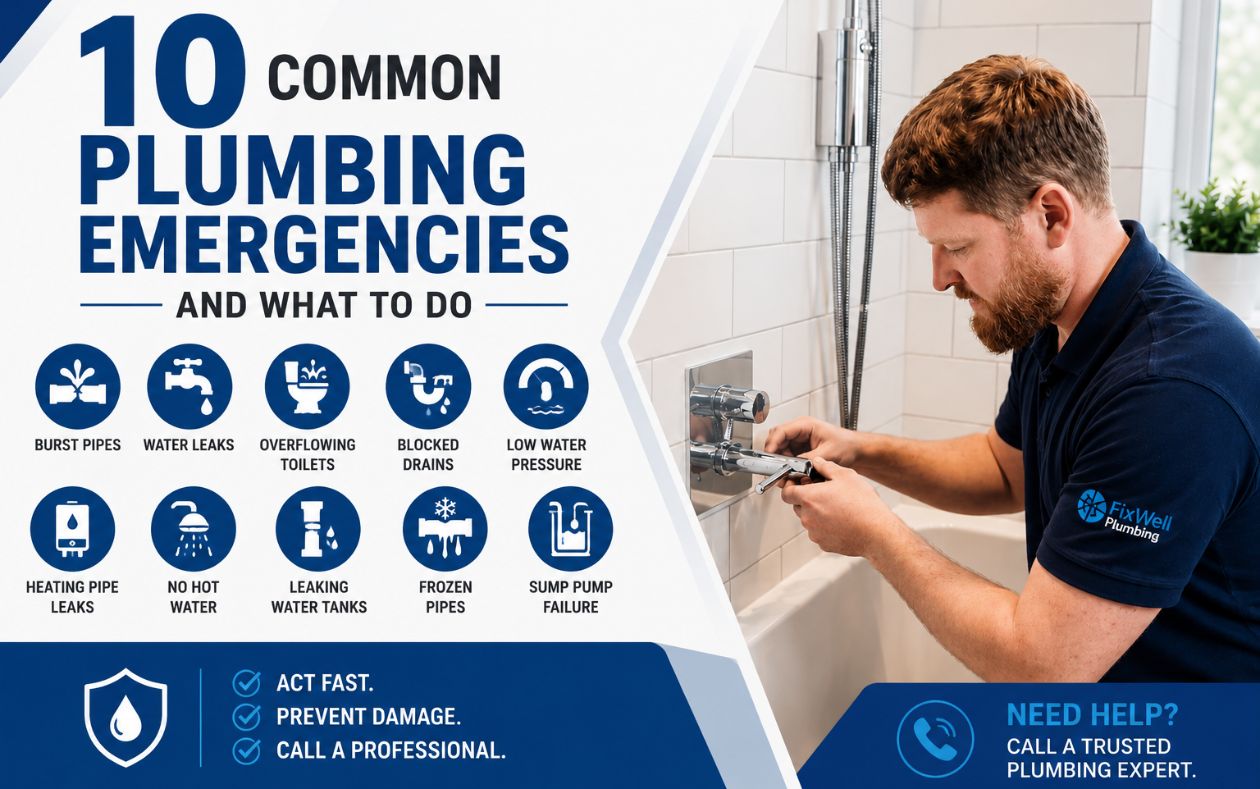
10 Common Plumbing Emergencies and What to Do
Many homeowners deal with plumbing problems that seem manageable at first but can quickly become more serious. A toilet may stop draining properly, water can suddenly appear on a ceiling or floor, or several taps may lose pressure without warning. When that happens, it is not always easy to know whether the problem is a plumbing emergency or what you should do first.
The short answer is that burst pipes, major water leaks, overflowing toilets, blocked drains, loss of water pressure, and frozen pipes are among the most common plumbing emergencies. The right response depends on the problem, but acting early can help limit water damage, protect your property and reduce further disruption.
At FixWell Plumbing, we provide professional plumbing services across Ealing and nearby West London, helping homeowners deal with urgent plumbing problems. We often explain how to spot the warning signs and know when immediate action is needed.
Key Takeaways
|
Why Do Plumbing Emergencies Need Immediate Attention?
Plumbing emergencies need immediate attention because they can quickly cause water damage, safety concerns and disruption to essential services in your home. Acting early can help contain the issue, protect your property and reduce the risk of the fault affecting other parts of the plumbing system.
- Prevent Water Damage: Leaks and burst pipes can damage walls, ceilings, flooring and belongings if water continues to spread.
- Reduce the Risk of Mould and Damp: Water from a leak can soak into walls, floors and other materials. If these areas remain wet, damp and mould can develop, potentially causing further damage to your home.
- Avoid Hygiene Problems: Overflowing toilets and backed-up drains can bring wastewater into your home and should be dealt with promptly.
- Protect Electrical Areas: Water leaking near sockets, wiring or electrical appliances can create a serious safety concern.
- Reduce Repair Costs: Addressing a plumbing emergency quickly can prevent further damage, helping you avoid more extensive and expensive repairs later.
10 Most Common Plumbing Emergencies
The most common plumbing emergencies include burst pipes, major leaks, overflowing toilets, blocked drains, loss of water supply, leaking water tanks and broken water heaters. These problems can cause water damage, disrupt essential plumbing and lead to more costly repairs if they are not dealt with quickly.
1. Burst Pipes
A burst pipe can release a significant amount of water in a short time, reaching cupboards, flooring, walls and even ceilings. It can happen due to frozen pipework, corrosion, weakened pipes or a failed joint or fitting.
When we assess a suspected burst pipe, we locate the leak, check the stopcock or isolation valve, and inspect nearby pipes and fittings. If damaged pipework or a faulty valve is responsible, our pipework and valve repair services can help with the appropriate repair or replacement.
Signs You May Have a Burst Pipe
- A sudden drop or loss of water pressure.
- Damp patches on walls or ceilings.
- Running or dripping sounds when taps are off.
- Water appearing in unexpected areas.
- An unexplained increase in water usage.
Avoid
- Relying on tape or sealant as a permanent repair.
- Touching sockets, switches or appliances near leaking water.
- Ignoring damp areas after the visible leak has stopped.
2. Major Water Leaks
A major water leak can come from damaged pipework, loose connections, faulty valves or plumbing fixtures. Water may collect under sinks, spread across floors or remain hidden behind walls and cabinets, so finding and controlling the source quickly can help prevent further damage.
When we check a leak, we look at fittings, appliance connections and nearby pipework to find the source. For hidden leaks, our leak detection and repair service can help pinpoint the problem.
Signs of a Major Water Leak
- Water pooling around pipes, sinks or appliances.
- Damp patches spreading across walls or floors.
- Running water sounds when taps are off.
Avoid
- Continuing to use the affected tap, appliance or fixture.
- Tightening fittings excessively in an attempt to stop the leak.
- Touching electrical fittings or appliances near leaking water.
3. Severely Blocked Drains
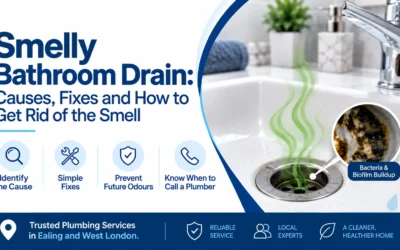
A blocked drain prevents wastewater from flowing away properly and can eventually force it back through a sink, bath or shower. In kitchens, grease, food debris and fat are common causes; in bathrooms, hair and soap residue often build up inside the waste pipe.
When investigating a blockage, we check which fixtures are affected. A single slow sink often points to a local issue, but several slow or backing-up fixtures may indicate a blockage further along the drainage system.
Signs of a Severely Blocked Drain
- Water is not draining or is draining very slowly.
- Wastewater is returning through a plug hole.
- Gurgling noises after water drains.
- Strong smells are coming from the drain.
- Water rises in one fixture when another is used.
Avoid
- Running more water to test whether the blockage will clear itself.
- Pouring chemical drain cleaners into standing water.
- Mixing drain-cleaning products.
- Pushing wire, sticks or unsuitable tools down the waste pipe.
4. Overflowing Toilets
An overflowing toilet usually happens when a blockage prevents water and waste from passing through the waste pipe, causing the bowl to fill instead of empty. Common causes of an overflowing toilet include too much toilet paper, wipes or other objects lodged in the pipe.
If a toilet is blocked, we also check nearby basins, baths and showers to see whether the issue affects more than one fixture. If the problem is isolated to the toilet, our toilet repair services can help with blockages, leaks and flushing faults.
Signs Your Toilet May Overflow
- Water is rising higher than normal after flushing.
- The bowl is taking a long time to empty.
- Waste remaining after the toilet is flushed.
- The water level changes when a basin or bath drains.
Avoid
- Flushing repeatedly, as each flush can add more water to the bowl.
- Pouring boiling water into the toilet, as it can damage the ceramic.
- Using chemical drain cleaners, particularly when water is already backed up.
- Pushing brushes, wire or other objects into the toilet.
5. No Water Supply
If you turn on several taps and no water comes out, first establish whether the problem is limited to your home or affecting the local area. If your neighbours still have water, the cause could be a closed or faulty stopcock, frozen pipework, a leak on the incoming supply pipe or another fault within your plumbing system.
Our plumbers check whether both hot and cold water are affected, whether the main stopcock is fully open and whether there are signs of a supply leak. If only part of the property is affected, the issue is likely to be more localised.
Signs of a Water Supply Problem
- No water from both hot and cold taps.
- A sudden loss of water throughout the property.
- Very low pressure from several taps.
- No reported interruption from your water supplier.
Avoid
- Forcing a stopcock that is stiff or seized.
- Using a naked flame or boiling water on frozen pipework.
- Ignoring signs of a hidden leak if the loss of supply was sudden.
6. Frozen Pipes
Frozen pipes are a common winter plumbing emergency. When water freezes inside a pipe, it expands and puts pressure on the pipework, joints and fittings. This can cause the pipe to crack or burst, with water escaping once the ice begins to thaw.
Our plumbers check frozen pipes for splits, damaged joints or expansion before restoring the water supply, as hidden cracks can start leaking once the pipe begins to thaw.
Signs of a Frozen Pipe
- Little or no water from a tap.
- Frost visible on exposed pipework.
- A pipe appearing swollen or cracked.
- Unusual noises when opening a tap.
- Leaking water as the pipe thaws.
Avoid
- Using a blowtorch or naked flame.
- Pouring boiling water directly over the pipe.
- Applying intense heat to one spot.
- Restoring the water supply when the pipe is cracked or leaking.
7. Fixture or Valve That Will Not Shut Off
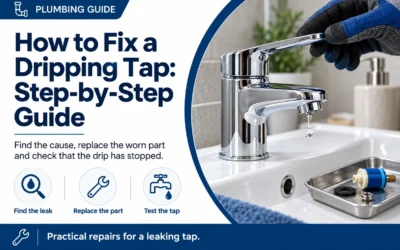
A tap, valve or other plumbing fitting can become urgent when it starts releasing water continuously or can no longer be shut off properly. The cause may be a failed washer, cartridge, seal, valve or a damaged fitting.
We check the condition of the fitting and its internal parts to see whether a repair is worthwhile. If it is badly worn, corroded or has failed repeatedly, replacement may be the more reliable choice.
Signs of a Worn-Out Fixture
- A tap that continues dripping after being turned off.
- Water leaking around the base of a tap.
- A handle or valve that is stiff or difficult to close.
- Water is spraying from around a fitting.
Avoid
- Forcing a stiff tap, handle or valve.
- Overtightening a dripping tap to stop the leak.
- Continuing to use a cracked or heavily corroded fixture.
8. Sudden Low Water Pressure
A sudden drop in water pressure can make taps run weakly, and showers lose their normal flow. If several outlets are affected at the same time, the cause could be a problem with the incoming supply, a partially closed valve, a pressure issue or water escaping somewhere in the system.
Our plumbers first check whether low pressure affects one outlet or several, and whether both hot and cold water are affected. If the whole property is affected, we also inspect the incoming supply, stopcock, visible leaks and pressure controls.
Signs of Low Water Pressure
- Weak flow from several taps.
- Shower pressure suddenly dropped.
- Hot and cold water are both running slowly.
- Pressure changes noticeably during use.
Avoid
- Adjusting pressure valves without knowing their correct setting.
- Removing taps or shower components when several outlets are affected.
- Leaving a sudden pressure drop unchecked if you also notice signs of escaping water.
9. Leaking or Failed Hot Water System
A hot water system can become an emergency when it is actively leaking, cannot be safely controlled or causes a serious loss of hot water where the fault may worsen. Problems can come from valves, connected pipework, immersion components or the hot water cylinder itself.
We check the cylinder, valves and connected pipework to identify the fault and assess the system’s condition. If repairs are no longer reliable, our hot water systems service can recommend the right repair or replacement.
Signs of a Broken Water Heater
- No hot water throughout the property.
- Hot water is turning cold unexpectedly.
- Water is leaking around the heater or cylinder.
- The system repeatedly switches off.
Avoid
- Removing covers or attempting internal repairs yourself.
- Repeatedly resetting a heater that keeps cutting out.
- Adjusting valves or electrical components without knowing their function.
10. Leaking Water Storage Tank
A leaking water storage tank can cause water to collect in the loft and eventually reach insulation, joists or the ceiling below. The problem often comes from a faulty float valve that allows the tank to overfill, a leaking pipe connection or a crack in the tank itself.
Our plumbers check the tank, float valve, overflow and pipe connections to find the source of the leak, as ceiling damp does not always appear directly below the problem.
Signs of a Leaking Water Storage Tank
- Water is running continuously from the overflow pipe.
- Water is collecting beneath the tank.
- A float valve that continues running when the tank is full.
- Dampness or staining on the ceiling below.
Avoid
- Blocking or capping the overflow pipe.
- Forcing or bending the float valve.
- Walking across unsupported areas of the loft to reach the tank.
Expert advice from FixWell Plumbing: When a plumbing emergency happens, act quickly to control the water and prevent further damage. If it is safe, turn off the water at the stopcock and avoid using the affected fixture until the problem has been checked.
What Should You Do First in a Plumbing Emergency?
The first thing to do in a plumbing emergency is to control the immediate risk and stop more water from escaping where it is safe to do so. The exact steps depend on the problem, but acting calmly and quickly can help reduce damage before a plumber arrives.
- Turn off the water supply: Close the nearest isolation valve or main stopcock if water is escaping.
- Stop using the affected plumbing: Do not use the toilet, sink, shower or appliance connected to the problem.
- Stay clear of electrics: If water is near sockets, switches, appliances or wiring, do not touch them. Keep away from the area and seek professional help.
- Protect the surrounding area: Use buckets or towels to catch escaping water and move furniture and belongings away from the affected area.
- Call a plumber: Contact a local plumber if you cannot control the leak or the problem needs urgent repair. If you are in Ealing or nearby West London, FixWell Plumbing can provide professional help and assess the fault properly.
Expert tip: Control the immediate problem first to limit further damage, then have the underlying cause properly identified and repaired to reduce the risk of it happening again.
When Should You Call an Emergency Plumber?
You should call an emergency plumber when a plumbing problem is causing active water damage, involves sewage, affects essential plumbing or cannot be safely controlled.
Seek urgent help for the following emergency plumbing problems:
- A burst pipe is releasing water into your property.
- The problem is getting worse quickly.
- Wastewater is entering your home.
- Essential water or toilet facilities cannot be used.
- Water is affecting electrical areas.
- You cannot safely identify or access the source.
From our experience, if a plumbing problem cannot be safely controlled, it is best to have it checked as soon as possible. Our plumbing services can help identify the fault and get the problem dealt with properly.
How Much Does Emergency Plumbing Cost?
Emergency plumbing in the UK typically costs around £75–£150 per hour, although the final price depends on when you need the plumber, the type of emergency and the work required. However, evening, weekend, and public holiday call-outs usually cost more, and replacement parts may be charged separately.
| Emergency Plumbing Cost | Typical UK Price | What Can Affect the Cost |
| Urgent Call-Out | £70–£150 | Distance, time of day and initial assessment are required. |
| Standard Daytime Emergency | £75–£150 per hour | Type of fault and time needed to complete the repair. |
| Out-of-Hours Visit | £100–£200+ per hour | Evening and weekend availability can increase labour rates. |
| Overnight / Public Holiday | £150–£300+ per hour | Limited availability and urgency can increase the cost. |
| Repair Parts | Varies | Depends on the fittings, pipework or components required. |
Price note: These are general online UK emergency plumbing price ranges and may change over time. Actual FixWell Plumbing costs depend on the fault, labour, parts and call-out requirements.
Before booking an emergency plumber, check what the call-out fee includes and whether labour and parts are extra. For urgent plumbing problems in Ealing or West London, request a plumbing quote.
How Can You Prevent Plumbing Emergencies?
You can prevent many plumbing emergencies by checking your plumbing regularly and dealing with small problems before they become more serious. Paying attention to leaks, slow drains, water pressure and exposed pipework can help reduce the risk of unexpected damage.
- Fix Small Leaks Early: Repair dripping taps, leaking valves and damp pipe connections before they worsen.
- Keep Drains Clear: Keep grease, food waste, wipes and sanitary products out of sinks and toilets.
- Protect Pipes From Freezing: Insulate exposed pipes in lofts, garages and other cold areas.
- Check Hoses and Fittings: Look for cracks, bulges, corrosion or moisture around appliance hoses and flexible connections.
- Watch Water Pressure: A sudden or repeated change in pressure can indicate a plumbing problem that needs checking.
- Know Your Stopcock: Keep it accessible and make sure you know how to shut off your water supply.
- Act on Warning Signs: Recurring blockages, unusual noises, damp patches or unexplained water use should be investigated early.
Conclusion
Understanding the common plumbing emergencies can help you react quickly and limit damage to your home. Whether you are dealing with a burst pipe, an overflowing toilet, a blocked drain, or a serious leak, the priority is to make the area safe, control the water where possible, and avoid using the affected plumbing until the cause has been checked.
Regular plumbing checks and early repairs can also prevent smaller problems from developing into emergencies. If a problem cannot be safely controlled or needs urgent attention, getting professional help is the safest next step.
At FixWell Plumbing, we have experience dealing with a wide range of plumbing problems, including burst pipes, water leaks, blocked drains, overflowing toilets and hot water issues. If you have an urgent problem or want to get an issue checked before it gets worse, contact us for professional help.
FAQs
Should I attempt an emergency plumbing repair myself?
You can take simple damage-control steps yourself, such as turning off the water, stopping use of the affected fixture and containing a small leak. Avoid dismantling pipework, valves, heaters or electrical components unless you are competent to do so.
What counts as a plumbing emergency?
A plumbing emergency is any urgent plumbing problem that could cause property damage, flooding, sewage exposure or a safety risk if left untreated. Burst pipes, major leaks, overflowing toilets and sewage backups are common examples.
Should I turn off the water during a plumbing emergency?
Yes. If water is leaking or escaping, turn off the affected isolation valve or main stopcock as soon as it is safe to do so. This can limit water damage until the plumbing problem is repaired.
Is a blocked toilet a plumbing emergency?
Yes, a blocked toilet can be a plumbing emergency if it is overflowing, backing up with wastewater or is the only usable toilet in your home. If the water level is rising, stop flushing and arrange professional help.
What do we usually check during an emergency plumbing visit?
During an emergency plumbing visit, we usually check the source of the problem, affected pipework and fittings, nearby fixtures, isolation valves, and any signs of leaks, damage or blockages.
What should you avoid doing during a plumbing emergency?
During a plumbing emergency, you must avoid using the affected fixture, forcing valves, mixing drain chemicals, applying intense heat to frozen pipes, or touching electrics near water.