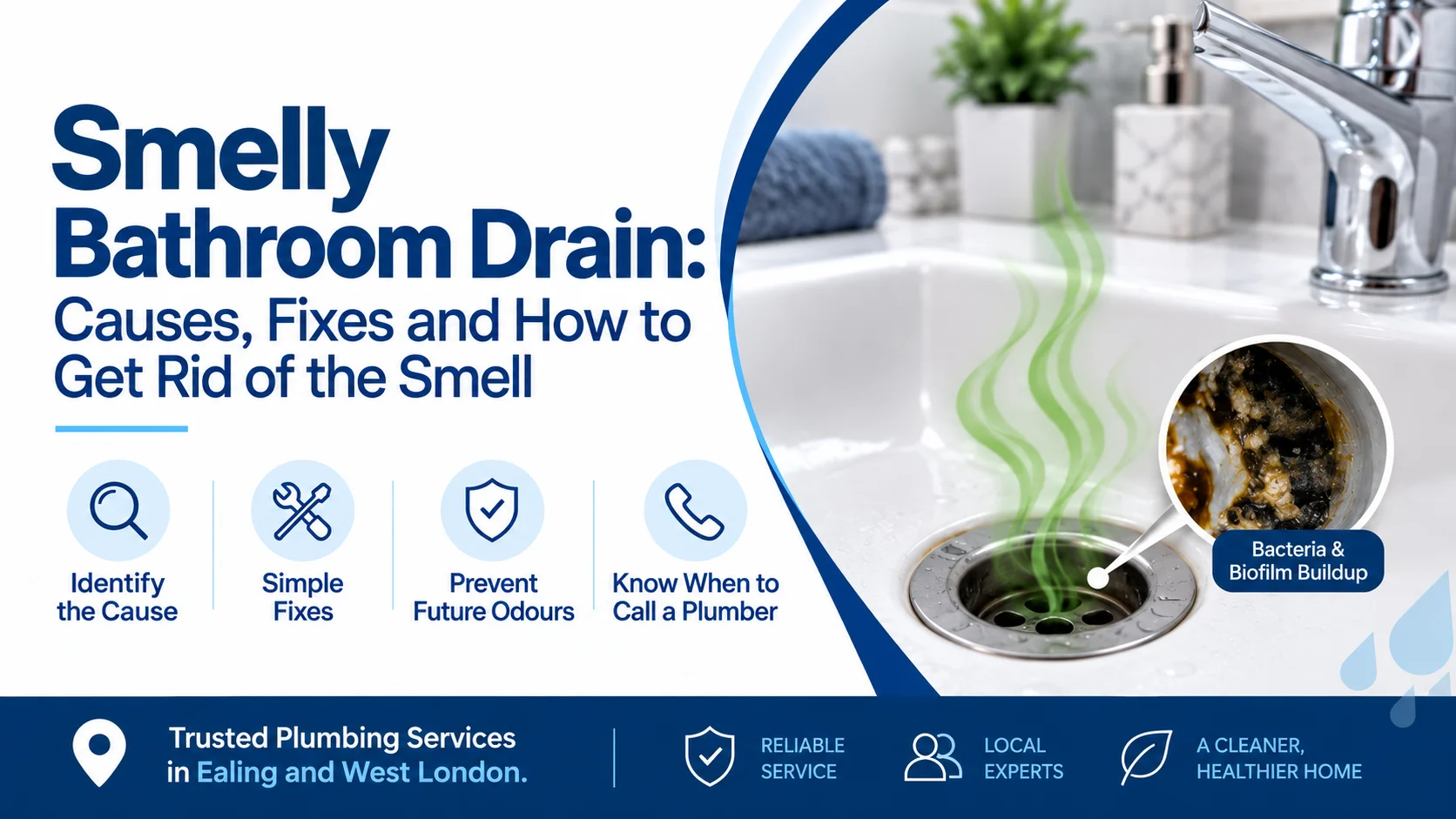
Have you noticed an unpleasant smell coming from your bathroom drain, even after cleaning the sink, shower or bath? A smelly bathroom drain can make the whole room feel dirty, and the odour may keep returning if you only mask it with air freshener or cleaning products.
Hair, soap residue, bacteria, trapped debris or problems inside the waste pipe can all cause the smell. If you ignore the issue, the build-up may lead to slower drainage, recurring blockages or stronger sewage-like odours.
The good news is that you can clean and treat many smelly bathroom drains once you identify the cause. At FixWell Plumbing, we help homeowners across Ealing and nearby West London deal with drainage and plumbing problems. Here, we explain what causes a bathroom drain to smell, how to get rid of the odour and when you may need professional help.
Key Takeaways
|
What Causes a Smelly Bathroom Drain?
A smelly bathroom drain is usually caused by a build-up of organic matter, bacteria or a problem with the trap or waste pipe. The exact cause can vary depending on whether the smell comes from the sink, shower, bath or floor drain. The common causes include:
- Hair and Soap Build-up: Hair, soap scum and body oils can collect inside the drain and begin to smell as they break down.
- Bacteria Inside the Drain: Moisture and organic debris create the right conditions for bacteria to grow and produce unpleasant odours.
- A Dry Trap: The water inside the trap helps block sewer gases. If the trap dries out, those gases can travel back into the bathroom.
- Mould or Mildew: Damp areas around the drain can allow mould or mildew to develop and add to the odour.
- Problems With the Waste Pipe: Loose fittings, damaged seals or poorly connected pipework can allow smells to escape. Problems with ageing or damaged pipework may require professional pipework and valve repairs.
- Sewer Gas Entering the Bathroom: A strong sewage-like smell can indicate a deeper drainage or venting issue that needs professional inspection.
What Do Different Bathroom Drain Smells Mean?
Common bathroom drain smells include sewage, rotten egg, musty, and sour or stale odours. Each type of smell can indicate a different problem, from sewer gases and a dry trap to moisture, bacteria, hair, soap build-up or biofilm inside the drain.
| Type of Smell | What It May Indicate |
| Sewage smell | A dry trap, damaged seal or ventilation problem may be allowing sewer gases to enter the bathroom. |
| Rotten egg smell | Sewer gases or stagnant waste may be sitting inside the drain or waste pipe. |
| Musty smell | Trapped moisture, bacteria or organic build-up may be developing around or inside the drain. |
| Sour or stale smell | Hair, soap residue and biofilm may be collecting inside the drain and starting to break down. |
How Can You Find the Source of a Bathroom Drain Smell?
You can find the source of smelly drains in the bathroom by checking each drain separately and looking for signs such as trapped debris, slow drainage, standing water or a dry trap.
- Check each drain individually: Smell around the sink, shower, bath and floor drain to identify where the odour is strongest.
- Run water into the drain: If the smell improves after running water, the trap may have dried out.
- Check how quickly the water drains: Slow drainage can indicate hair, soap or other debris inside the waste pipe.
- Look inside the drain opening: Visible hair, slime or soap build-up can produce unpleasant smells.
- Check around pipe joints and seals: Loose or damaged connections can allow drain odours to escape.
- Notice when the smell appears: An odour that becomes stronger after flushing a toilet or using another fixture may point to a ventilation or drainage issue.
How to Get Rid of Smelly Drains in the Bathroom?
You can get rid of smelly drains in the bathroom by removing the material causing the odour, cleaning the drain and trap, and fixing any blockage or faulty connection.
1.Remove Hair and Soap Build-Up
Remove any visible hair, soap scum and dirt from the drain opening first. In shower and bath drains, hair often wraps around the strainer and mixes with soap residue, creating a slimy build-up that starts to smell.
Lift the drain cover where possible and pull out the trapped material with gloves or a suitable drain-cleaning tool. Removing the build-up directly works better than trying to cover the smell with bleach or air freshener.
2.Clean the Drain Opening and Strainer
Scrub the plug hole, drain opening and strainer to remove soap scum, body oils and biofilm. These materials stick to the inside surface of the drain and can trap bacteria, which creates a stale or sour smell.
Pay particular attention to hidden areas such as underneath the sink plug, around the shower strainer and inside the overflow opening. For example, a bathroom sink can still smell even when the water drains normally if residue has built up around the plug mechanism or overflow channel.
3. Flush the Drain With Hot Water
After removing hair and loose debris, flush the drain with hot, but not boiling, water to wash away softened soap scum, body oils and light residue. Pour the water slowly so it can move through the pipe and carry loosened build-up away.
Hot water works best when the drain still flows normally. If the water drains slowly or starts backing up, the drain likely has a blockage that needs to be cleared rather than simply flushed.
4.Refill a Dry P-Trap or U-Bend
A P-trap or U-bend keeps a small amount of water inside the pipe. This water acts as a barrier that stops sewer gases from coming back up through the drain and into the bathroom.
If a basin, shower or bath is not used regularly, the water in the trap can dry out. When this happens, sewer gases can pass through the drain and cause a bad smell.
Run water through the drain for a short time to refill the trap. If the smell goes away but returns quickly, the trap may be leaking, or there may be another drainage problem affecting the water seal.
5. Check How Quickly the Water Drains
Watch how quickly water leaves the basin, bath or shower after cleaning. It should drain smoothly without pooling for long periods.
If the water drains slowly, gurgles or starts to back up, there may be a partial blockage or build-up further inside the waste pipe. In this case, surface cleaning alone may not remove the cause of the smell. The blockage needs to be cleared from inside the drain or waste pipe.
6. Check Waste Pipe Connections and Seals
If the smell remains after cleaning the drain, check any accessible waste pipe connections and seals. A loose fitting, damaged seal or poorly connected pipe can allow unpleasant drain gases to escape into the bathroom.
Look for visible gaps, small leaks, damp patches or movement around the joints. If a fitting or seal is damaged, it should be properly repaired or replaced rather than covered with a temporary sealant. Where water is escaping around pipework or connections, leak detection and repairs can help identify the source.
Why Does My Bathroom Drain Smell More in Hot Weather?
Bathroom drain smells can become stronger in hot weather because higher temperatures increase bacterial activity, make trapped waste smell stronger and cause water in rarely used traps to evaporate faster.
Warm conditions can make existing soap, hair, biofilm and other organic residue inside the drain produce stronger odours. The heat does not usually create the problem itself, but it can make an existing issue much more noticeable.
If the smell only appears during warmer weather, run water through the affected basin, bath or shower and check whether the odour improves. If it keeps returning despite regular use, the cause may be a blockage, leaking trap or another drainage issue.
How Can You Prevent Smelly Bathroom Drains?
You can prevent smelly bathroom drains by using a drain strainer, cleaning the drain regularly, keeping water in rarely used traps and dealing with slow drainage before build-up becomes a blockage.
- Use a Drain Strainer: Catch hair and larger debris before they enter the waste pipe.
- Clean the Drain Regularly: Remove soap scum, body oils and biofilm from the plughole, strainer and drain opening.
- Deal with Slow Drainage Early: Clear minor build-up before it develops into a larger blockage and starts trapping dirty water.
- Avoid Washing Unnecessary Debris Down the Drain: Keep hair, thick products and other waste out of bathroom drains where possible.
- Check Seals and Pipe Connections: Repair loose fittings or damaged seals that may allow drainage smells into the bathroom.
Are Chemical Drain Cleaners Safe for a Smelly Bathroom Drain?
No, chemical drain cleaners are generally not the safest or most suitable option for a smelly bathroom drain. They may remove some residue, but they often fail to fix the actual cause of the odour.
Chemical drain cleaners are also not pipe-friendly, especially when used repeatedly. Harsh formulas can affect older metal pipework, seals, joints and some plastic fittings over time.
A smelly drain may come from organic build-up, a dry trap, a damaged seal or another waste pipe problem. Chemical cleaners may only treat part of the build-up, so the smell can return if the underlying issue remains.
When Does a Smelly Bathroom Drain Need a Plumber?
A smelly bathroom drain needs a plumber when the odour keeps returning after cleaning, smells strongly of sewage or appears alongside other drainage problems. These signs can mean the issue is deeper inside the waste pipe or drainage system.
When we inspect a recurring drain smell, we check the trap, waste connections, drainage speed and nearby pipework before recommending a repair.
- The smell keeps returning: Repeated odours after cleaning can point to a blockage, damaged seal or waste pipe problem.
- Several drains smell at the same time: If the basin, shower and bath all smell, the issue may involve the wider drainage system.
- The drain is slow or backing up: Slow drainage, standing water or wastewater backing up can indicate a deeper blockage.
- You hear frequent gurgling: Gurgling from the drain can indicate restricted flow or a drainage ventilation problem.
- You find leaks or damaged pipework: Loose fittings, leaking traps, or damaged waste pipes need proper repair rather than repeated cleaning.
If you are unsure which type of professional plumbing help the problem needs, our guide to different types of plumbing services explains the main options.
Conclusion
Hair, soap residue, bacteria, a dry trap or a partial blockage often cause a smelly bathroom drain. In many cases, regular cleaning, removing visible debris and keeping water in the trap can help get rid of the smell.
If the odour keeps returning, affects several drains or comes with slow drainage, gurgling or a strong sewage smell, the problem may sit deeper in the waste or drainage system. In that case, identifying the underlying cause is more effective than repeatedly masking the smell.
If you suspect a problem with the waste pipe, trap or surrounding plumbing, FixWell Plumbing can inspect the affected area, identify the source of the smell and recommend the appropriate repair. Contact us to discuss the problem or arrange a visit.
FAQs
Can a bathroom drain smell even if it is not blocked?
Yes. A bathroom drain can smell even if it is not blocked. Common causes include a dry trap, soap residue, bacteria, biofilm, a damaged seal or a problem with the waste pipe or drainage ventilation.
Why does my bathroom drain smell like sewage?
A bathroom drain can smell like sewage when sewer gases escape through the drain. Common causes include a dry P-trap or U-bend, a damaged seal, a faulty waste pipe connection or a drainage ventilation problem.
Can a blocked vent pipe cause bathroom drain smells?
Yes. A blocked vent pipe can cause bathroom drain smells by disrupting air pressure in the drainage system and allowing sewer gases to come back through the drain.
Can old bathroom pipework cause unpleasant drain smells?
Yes. Old bathroom pipework can cause unpleasant drain smells if seals, joints or waste connections have deteriorated over time. Corrosion, small leaks or poorly fitted connections can also allow odours from the drainage system to enter the bathroom.
How long should it take for a bathroom drain smell to disappear after cleaning?
If the smell comes from surface build-up, it should usually improve soon after the drain is cleaned and flushed. However, if the odour remains or returns within a short time, the cause may be deeper in the waste pipe, trap or drainage system.