
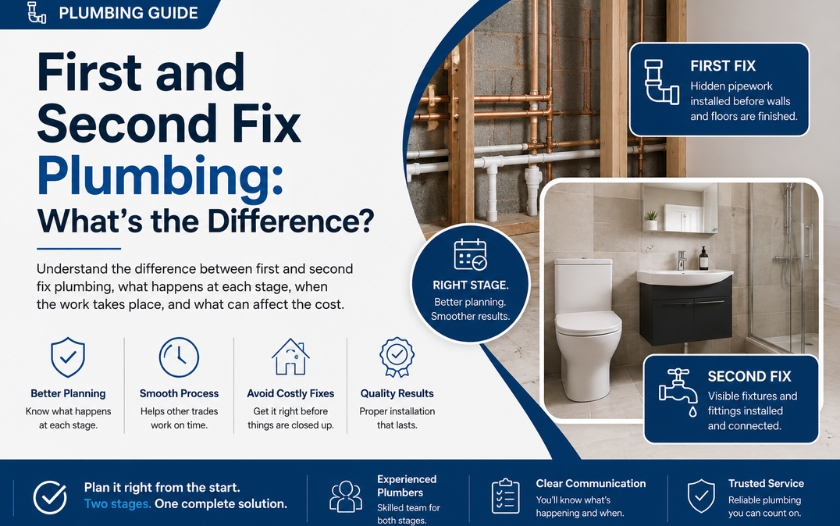
If you’re renovating a home or working on a new build, you may hear your plumber talk about first and second fix plumbing. But what do these stages actually mean, and why does it matter when each one is completed? The terms sound simple, but if you’re not sure what happens at each stage, it can be difficult to know when plumbing work should be completed and how it fits around the rest of the build.
In simple terms, first-fix plumbing is the hidden work carried out before walls, floors, and ceilings are finished, and second-fix plumbing is the visible work completed later, such as fitting toilets, basins, taps, and appliances. Knowing where one stage ends and the next begins makes it easier to coordinate other trades, avoid delays, and reduce the risk of finished areas needing to be opened up again.
At FixWell Plumbing, we help homeowners plan and complete both stages of plumbing work at the right point in their renovation or new-build project, from concealed pipework and connections through to the final fixtures and fittings.
Key Takeaways
|
What is First Fix Plumbing?
First fix plumbing is the initial installation phase in a new build or major renovation, during which the main pipework and plumbing connections are installed before walls, floors and ceilings are closed or finished. It creates the hidden plumbing infrastructure needed for toilets, basins, showers, baths, radiators, appliances and other fixtures fitted during the second fix.
At this stage, plumbers position hot and cold water supplies, waste pipes, drainage connections and other concealed pipework according to the planned layout. Accurate positioning helps ensure the second fix can be completed correctly without unnecessary alterations.
What Does First Fix Plumbing Include?
First fix plumbing includes the main pipework and connections installed before walls, floors and other finished surfaces are closed up. The exact work depends on the property, layout and type of project, but it commonly includes:
- Hot and Cold Water pipework: Running supply pipes to planned locations for taps, showers, baths, toilets and appliances.
- Waste and Soil Pipework: Installing pipes that carry wastewater away from toilets, basins, sinks, baths and showers.
- Drainage Connections: Preparing connections that allow wastewater to flow into the property’s drainage system.
- Bathroom Pipework Preparation: Positioning water and waste connections for toilets, basins, baths and showers before tiling or wall finishes are completed.
- Heating Pipework: Running or altering pipes for radiators, heated towel rails and other heating connections.
- Kitchen and Appliance Connections: Preparing water supplies and waste connections for sinks, washing machines, dishwashers and similar appliances.
- Isolation Valves and Service Points: Installing shut-off points so parts of the plumbing system can be isolated for maintenance or repairs.
When Does First Fix Plumbing Take Place?
First fix plumbing usually takes place after the main structural work is complete but before plastering, tiling and other final finishes begin. This gives the plumber access to walls, floors and ceilings so the main water, waste and heating pipework can be installed, checked and adjusted before second fix plumbing begins.
What is Second Fix Plumbing?
Second fix plumbing is the finishing stage of a plumbing installation, where visible fixtures, fittings and appliances are connected to the pipework prepared during the first fix. This usually happens once plastering, tiling, flooring and other main finishing work have been completed.
At this stage, plumbers fit and connect items such as toilets, basins, taps, showers, baths and kitchen appliances, then test the system to make sure everything operates correctly. The focus is on completing the usable, visible parts of the plumbing system and ensuring each connection is secure and ready for everyday use.
What Does Second Fix Plumbing Include?
Second-fix plumbing includes fitting and connecting the visible fixtures and fittings after the main pipework and surrounding finishes are in place. This stage brings the plumbing system into normal use and allows the final connections to be checked before the work is completed.
Typical second-fix plumbing work can include:
- Toilets and Basins: Installing and connecting toilets and basins to the prepared water and waste connections.
- Showers and Baths: Connecting shower fittings, bath taps, wastes and traps to the pipework installed during first fix.
- Radiators and Towel Rails: Installing and connecting radiators and heating pipework to the prepared heating system.
- Kitchen and Appliance Connections: Connecting sinks, washing machines, dishwashers and other suitable appliances to the available water and waste points.
- Taps and Mixers: Fitting taps, mixers and showers to basins, sinks, baths and shower areas.
- Final Checks and Testing: Checking water flow, drainage, joints and visible connections to make sure everything is working correctly and there are no obvious leaks.
When Does Second Fix Plumbing Take Place?
Second fix plumbing usually takes place after plastering, tiling, decorating and other major finishes are complete. At this stage, the prepared connections are accessible, and the final fixtures can be installed without risking damage from earlier construction work.
What is the Difference Between First and Second Fix Plumbing?
The main difference is that first-fix plumbing focuses on the hidden infrastructure, whereas second-fix plumbing completes the visible fixtures and final connections. The table below highlights the key differences between the two stages.
| Feature | First Fix Plumbing | Second Fix Plumbing |
|---|---|---|
| Main Purpose | Prepares the hidden plumbing infrastructure. | Completes the usable plumbing system. |
| Timing | Before plastering, tiling and final finishes. | After major finishes are complete. |
| Typical Work | Water supplies, waste pipes, drainage and concealed connections. | Toilets, basins, taps, showers, baths and radiators. |
| Access | Often requires open walls, floors and ceilings. | Mainly uses prepared connection points in finished areas. |
| Coordination | Usually coordinated with builders, electricians and other first-fix trades. | Often coordinated with tilers, decorators and final-fit trades. |
| Testing | Pipework and connections are checked before they are concealed. | Fixtures are tested for leaks, flow, drainage and correct operation. |
| Changes | Adjustments are easier before surfaces are finished. | Changes can be more disruptive once the finishes are complete. |
Stage of the Build
First fix plumbing takes place earlier in a renovation, extension or new-build project, before walls, floors and ceilings are fully finished. However, the second fix takes place later, once the rooms are ready for the final fixtures.
Getting the timing right helps plumbers complete each stage without disturbing finished surfaces.
Hidden Work vs Visible Work
First fix covers the pipework and connection points that will later be concealed. Similarly, second fix uses those prepared connections to install the final fixtures.
For example, during first fix, we may position the hot and cold water supplies and waste connection for a basin. During second fix, we install the basin and taps, connect them to the prepared pipework and check that everything works correctly.
Type of Plumbing Work
During the first fix, plumbers prepare the water supply, waste and drainage connections needed for the planned layout. These need to be positioned correctly for the fixtures that will be installed later.
Once that work is complete, second fix uses those prepared connections to fit and connect the final fixtures. Both stages are common types of plumbing services used in bathroom, kitchen and renovation projects.
Connection and Testing
First fix sets up the connection points and allows the pipework to be checked before it is covered. After that, the final fixtures are connected during second fix and tested for leaks, water flow, hot and cold supply, waste drainage and correct operation.
As a result, accurate first-fix work helps the second fix run smoothly and reduces the risk of problems once the surfaces are finished.
FixWell Expert Tip: Before walls or floors are closed, make sure the first-fix pipework and joints have been checked for leaks and that waste connections are correctly positioned. It is much easier to correct an issue while the pipework is still accessible.
First vs Second Fix Plumbing Costs in a Bathroom Renovation
Based on the type of bathroom work, we typically assess that first and second fix plumbing costs can vary considerably depending on the layout, amount of pipework, number of fixtures and access available.
First-fix plumbing can cost around £600–£1,500, while second-fix plumbing can cost around £600–£1,400. In total, the combined cost of both stages may range from around £1,200 to £2,900. These figures are only a general guide, as the final price will depend on the work required at the property.
Factors That Affect First and Second Fix Plumbing Costs
The various factors that affect first and second fix plumbing costs include the bathroom size, layout, amount of pipework required, number of fixtures, type of sanitaryware and overall complexity of the installation.
- Bathroom size and layout: Larger bathrooms or major layout changes usually require more pipework and labour.
- Pipework alterations: Moving water supplies, waste pipes or drainage connections can increase first-fix costs.
- Number of fixtures: More toilets, basins, showers, baths or radiators will increase second-fix labour.
- Type of sanitaryware: Wall-hung toilets, concealed cisterns and specialist shower systems can take longer to install.
- Condition of existing plumbing: Older or damaged pipework may need repairs or replacement before new connections are made.
- Finishing requirements: Extra care may be needed during second fix, where tiling, flooring, and decorated surfaces are already complete.
Please note: Online plumbing prices are only a general guide and may change. Your final cost will depend on the work required and the plumber’s rates. For an accurate price for your bathroom renovation in Ealing or nearby areas of West London, get a tailored quote from FixWell Plumbing.
What Should Be Checked Between First and Second Fix Plumbing?
Before moving from first fix to second fix plumbing, we check that the concealed pipework, waste connections and fixture positions are correctly installed, secure and ready for the final fittings.
- Pipe Positions: Connections are checked to ensure they line up with planned fixtures and appliances.
- Leaks and Joints: Pipework and fittings are inspected for leaks before being covered.
- Water Pressure and Flow: The supply is checked for suitable pressure and flow.
- Waste and Drainage Falls: Waste pipes are checked for the correct route and gradient.
- Pipe Support and Protection: Pipes are checked to ensure they are secure and protected.
- Access Points: Valves and traps are kept accessible for future maintenance.
- Coordination with Other Trades: Plumbing routes are checked for clashes with other building services.
How to Plan for First Fix and Second Fix Plumbing?
To plan first and second-fix plumbing, finalise the layout, choose the main fixtures, complete and check the hidden pipework, finish the surrounding surfaces, then install and test the visible fittings.
- Step 1: Finalise the Layout: Confirm where toilets, basins, showers, baths, radiators and appliances will be positioned before first fix begins.
- Step 2: Choose the Main Fixtures: Select key fixtures early so the plumber can prepare the correct water, waste and heating connections.
- Step 3: Complete and Check the First Fix: Make sure pipe routes, connection points and waste positions are correct before walls, floors or ceilings are closed.
- Step 4: Coordinate the Finishing Work: Allow plastering, tiling, flooring, and other required work to be completed before the second fix begins.
- Step 5: Complete the Second Fix: Install and connect the final fixtures, then check water flow, drainage and visible connections before the project is finished.
- FixWell Plumbing Tip: Choose your main fixtures early, especially concealed showers, wall-mounted taps and sanitaryware, as these can affect the pipe positions needed during first fix.
What Can Go Wrong Between First and Second Fix Plumbing?
Problems between first and second fix plumbing can include incorrect pipe positions, missed leaks, poor drainage falls and unsuitable final connections. If these issues are not identified early, they can lead to water damage, slow drainage, delays or additional repair work later in the project. Common issues include:
- Incorrect pipe positions: Connections may not line up properly with toilets, basins, showers or appliances.
- Leaks in concealed pipework: Small leaks can cause damage if they are not found before walls or floors are closed.
- Poor drainage falls: Incorrect gradients can cause slow drainage, blockages or standing water.
- Low water pressure or flow: Poorly planned pipework can affect how fixtures and appliances perform.
- Clashes with other services: Plumbing may interfere with electrical cables, heating systems or structural work.
- Damaged finishes during second fix: Poor positioning can mean tiles, walls or flooring need to be altered to fit final fixtures.
- Loose or poorly sealed connections: Final fittings can leak if joints and seals are not installed correctly.
Can the Same Plumber Do First and Second Fix Plumbing?
Yes, the same plumber can complete both first and second-fix plumbing, and this is often helpful for continuity. The plumber already knows where the pipework, waste connections and concealed fittings have been positioned, which can make the second fix more efficient.
From our experience, keeping the same plumber involved throughout the project helps maintain consistency and can reduce misunderstandings between stages. However, another plumber can take over if the existing first-fix work is inspected and found suitable for the final installation.
Conclusion
First and second fix plumbing are two essential stages of a new build, extension or major renovation. The first fix puts the hidden pipework and connections in place, and the second fix completes the installation with the visible fixtures, fittings and final connections.
Planning both stages properly helps prevent delays, incorrect connection points and unnecessary changes once walls, floors and finishes are in place.
If you are planning plumbing work in Ealing or West London, FixWell Plumbing is here to help. Our experienced team can assist with general plumbing installations, pipework repairs and alterations, bathroom plumbing, sanitaryware, heating systems and appliance connections. Contact us to discuss your project and get a tailored quote.
FAQS
Do small plumbing jobs have first and second fix stages?
No, small plumbing jobs such as replacing a tap, toilet or basin in the same position may only need one visit if the existing pipework can be reused. Separate first and second fix stages are more common for larger renovations, extensions and new installations.
Can the first fix plumbing be changed before the second fix?
Yes, first-fix plumbing can usually be changed before the second fix, especially if the pipework is still accessible. Changes may include moving water supplies, waste connections or fixture positions to suit an updated layout.
It is best to make any changes before plastering, tiling, or flooring is completed, as alterations become more difficult once the pipework is covered.
Why are first- and second-fix plumbing important?
First and second fix plumbing are important because they ensure the pipework, connections and final fixtures are installed correctly and in the right order. This helps prevent fitting issues, leaks and costly changes later.
How long is the gap between first- and second-fix plumbing?
There is no fixed gap between first- and second-fix plumbing. It can range from a few days to several weeks, depending on plastering, tiling, decorating and other work that needs to be completed before the final fixtures are installed.
Do you need both first and second-fix plumbing?
Yes, most new builds, extensions and major renovations need both first- and second-fix plumbing. First fix prepares the hidden pipework and connections, while second fix completes the installation with the final fixtures and fittings.