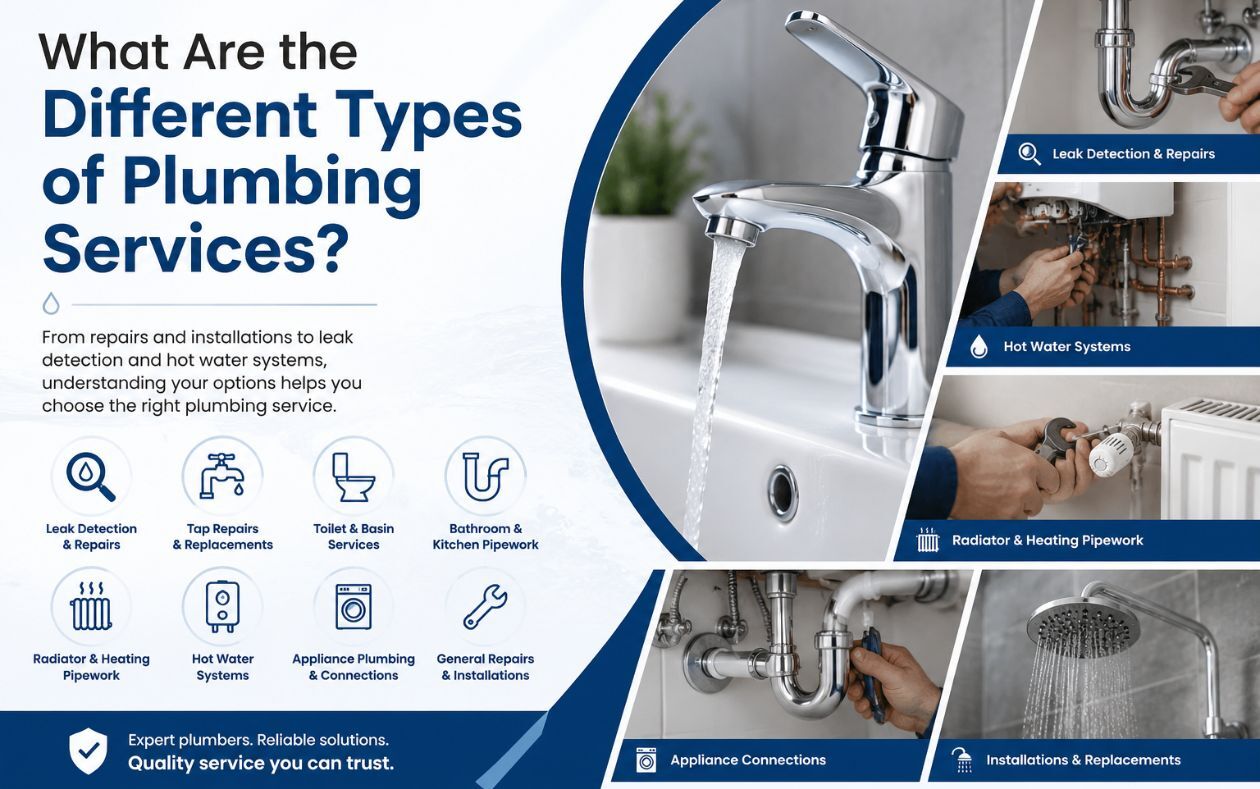
You may be wondering what types of plumbing services are available and which one is right for your problem. Knowing the difference can help you avoid delays, unnecessary costs, and booking a service that does not fully solve the issue.
At FixWell Plumbing, we know the visible problem does not always reveal the underlying cause. A proper assessment can help determine whether you need a repair, replacement, installation, leak investigation, or another type of plumbing work. In this guide, we explain the main types of plumbing services and when you may need each one.
Key Takeaways
|
What Are the Different Types of Plumbing Services?
The main types of plumbing services include general repairs, leak detection, tap repairs, toilet and basin plumbing, appliance connections, radiator plumbing, hot water systems, installations and emergency repairs. Each service covers a different type of problem, so the right one depends on the fault, its location and whether the job needs repair, replacement or further investigation.
1. Leak Detection and Repairs
Leak detection and repair services are used when water is escaping from a pipe, fitting or connection and the source is not immediately obvious. The aim is to trace the leak, check the surrounding plumbing and carry out the right repair. For example, a damp patch on a ceiling may come from a pipe or fitting above, as water can spread along nearby surfaces before it becomes visible.
2. General Plumbing Repairs
General plumbing repairs cover common household faults such as leaking fittings, loose connections, faulty valves and minor pipework issues. The best solution depends on where the fault starts, the condition of the surrounding components and whether the damaged part can be repaired reliably.
In many cases, replacing a worn washer, valve or short section of pipe is enough. If nearby components are deteriorating, replacement may be the better long-term option.
3. Bathroom and Kitchen Pipework
Bathroom and kitchen pipework services cover the water supply and waste pipes that connect fixtures and appliances in these areas. The work can include repairing leaks, replacing damaged pipe sections, altering pipe runs and adjusting existing connections during renovations or layout changes.
4. Hot Water System Plumbing
Hot water system plumbing involves cylinders, valves and pipework used to store and distribute hot water around a property. This type of work may include repairing leaks, replacing faulty valves or investigating problems with hot water flow and supply.
5. Plumbing Installations and Replacements
Installation and replacement services involve fitting new plumbing fixtures or upgrading existing ones. This can include taps, toilets, basins, showers, valves, appliances and pipework, with any necessary adjustments made to the existing connections.
6. Tap Repairs and Replacements
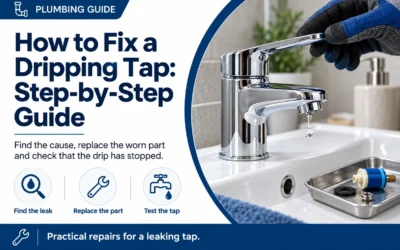
Tap repair and replacement services cover problems such as dripping taps, stiff handles, poor water flow, leaks around the base and worn internal components. Depending on the condition of the tap, the work may involve replacing a cartridge, washer or valve, repairing the connection, or fitting a new tap when repair is no longer practical.
7. Appliance Plumbing and Connections
Appliance plumbing services cover the water supply and waste connections needed for washing machines, dishwashers and other water-fed appliances. The work can include installing new connections, altering existing pipework, checking isolation valves and making sure inlet hoses and waste pipes are connected securely and positioned correctly.
8. Radiator and Heating Pipework Services
Radiator and heating pipework services cover the pipes, valves and connections that circulate heated water through radiators. This can include repairing radiator valves, replacing damaged connections and altering pipework when radiators are moved or replaced.
9. Emergency Plumbing Services
Emergency plumbing covers urgent faults that need prompt attention to reduce the risk of water damage or disruption. This can include burst pipes, major leaks, overflowing fixtures and other plumbing failures that cannot safely be left until a routine appointment.
FixWell Expert Tip: Plumbing issues can sometimes involve more than the visible fixture. We check the affected area, surrounding fittings, valves and pipework to identify the cause and recommend the most suitable repair or replacement.
Why Choosing the Right Types of Plumbing Service Matters?
Choosing the right type of plumbing service helps ensure the actual problem is identified and the correct repair or installation work is carried out. It can also reduce repeat faults, avoid unnecessary replacement costs and help prevent further damage.
- Helps Identify the Real Cause: The right service focuses attention on the affected fixture, connection, valve or pipework.
- Reduces Repeat Problems: Proper diagnosis and repair can lower the chance of the same problem returning.
- Avoids Unnecessary Replacement: Some faults can be repaired without replacing the entire fitting or component.
- Helps Prevent Further Damage: Timely plumbing work can reduce the risk of leaks affecting nearby walls, floors or fittings.
- Matches the Solution to the Problem: Depending on the fault, the right approach may involve a repair, replacement, installation or further investigation.
How Do I Know Which Type of Plumbing Service I Need?
You can usually identify the right plumbing service by matching the problem you can see with the part of the plumbing system affected. For example, a dripping tap may need a tap repair, a hidden leak may need leak detection, and an uncontrolled leak may require emergency plumbing.
| Problem or symptom | Plumbing service you may need |
|---|---|
| Dripping or leaking tap | Tap repair or replacement |
| Damp patch or unexplained water | Leak detection and repair |
| Running toilet or leaking basin | Toilet and basin plumbing |
| Shower leak or mixer fault | Shower and mixer plumbing |
| Leaking or damaged pipe | Pipework and valve services |
| New washing machine or dishwasher | Appliance plumbing and connections |
| Leaking radiator or valve | Radiator and heating pipework |
| Poor or unreliable hot water | Hot water system plumbing |
| Burst pipe or uncontrolled leak | Emergency plumbing repair |
From Our Experience: We suggest checking nearby fittings before assuming the visible area is the source. On one project, a homeowner reported water under a basin, but after checking the area, the problem was traced to a nearby tap connection. If you are unsure what help you need, contact our plumbing team for advice.
Common Mistakes When Choosing a Plumbing Service
The common mistakes people make when choosing the right plumbing service include assuming the visible problem is the actual source, replacing fixtures too quickly, ignoring the urgency of the issue, and trying to diagnose the fault without a proper inspection.
- Assuming the Visible Problem is the Source: Water can travel from nearby fittings, valves or pipework before it becomes visible.
- Replacing Fixtures Too Quickly: A tap, toilet or basin may not need full replacement if the fault is caused by a worn valve, washer or connection.
- Ignoring the Urgency of the Problem: Burst pipes, uncontrolled leaks and serious overflows may need emergency plumbing rather than a routine appointment.
- Overlooking Nearby Pipework and Fittings: The fault may be connected to surrounding valves, joints or pipework rather than the fixture itself.
- Trying to Diagnose the Problem Precisely: If the cause is unclear, it is better to explain the symptoms and let the plumber assess the affected area.
What Types of Plumbing Problems Need Emergency Service?
Common plumbing emergencies that may need urgent service include burst pipes, uncontrolled leaks, serious overflows, leaks near electrics and a sudden loss of essential water supply. These problems can cause damage quickly, so they should be assessed as soon as possible.
- Burst Pipes: A burst pipe can release a large amount of water quickly and may need immediate isolation and repair.
- Major or Uncontrolled Leak: Leaks that cannot be isolated locally can quickly damage floors, walls and fittings. Use the property’s stopcock to reduce the water flow until the issue is assessed.
- Serious Overflows: Continuous overflowing can cause water damage and may also create hygiene concerns.
- Leaks Near Electrics: Water close to sockets, wiring or electrical equipment should be treated as urgent. Avoid touching wet electrical fittings or equipment and arrange professional assistance.
- Major Loss of Water Supply: A sudden loss of essential water may need urgent assessment, depending on the cause.
- Hot Water or Heating System Leaks: Significant leaks from cylinders, valves, or heating pipework may need prompt attention to prevent further damage.
How to Choose the Right Type of Plumbing Service?
To choose the right type of plumbing service, start by identifying where the issue is, what symptoms you are seeing and how urgent the problem is. Then consider whether the job is likely to involve a repair, replacement, installation or further investigation by a plumber.
- Identify the affected area: Check whether the issue involves a tap, toilet, basin, appliance, pipework, hot water system or radiator connection.
- Look at the symptoms: Leaks, low water pressure, unusual noises, slow drainage, or unreliable hot water can point to different types of plumbing work.
- Consider the urgency: Burst pipes, major leaks and overflowing fixtures may require emergency plumbing rather than a routine appointment.
- Decide whether it is a repair or installation: Some problems can be fixed by replacing a worn part, whereas others may require a new fixture, connection or section of pipework.
- Check the condition of the existing plumbing: Older valves, fittings and pipework can influence whether repair or replacement is the better option.
- Get a professional assessment when needed: If the cause is unclear, a plumber can inspect the affected area and surrounding connections before confirming the right service.
FixWell Expert Tip: You do not need to diagnose the fault yourself. Note what you can see, where the problem is and how urgent it seems. You can also explore our plumbing services to find the most relevant type of help.
Conclusion
Understanding the different types of plumbing services can make it easier to know what kind of help your property needs. From tap repairs and pipework to appliance connections, hot water systems and emergency plumbing, each type of service is suited to a different problem.
From our experience working in homes across Ealing and nearby West London, the visible symptom does not always reveal the full cause. A proper assessment can help identify the cause, avoid unnecessary work and determine whether the best option is a repair, replacement, installation or further investigation.
If you are unsure which plumbing service you need, FixWell Plumbing can assess the problem and recommend the most suitable next step for your property. Get a Quote to discuss your plumbing needs with our team.
FAQ
What are the different types of commercial plumbing services?
Commercial plumbing services include pipework repairs, leak detection, washroom plumbing, hot water systems, appliance connections, drainage and emergency repairs. The exact service depends on the property and the plumbing issue.
What types of plumbing services are available for new builds?
Plumbing services for new builds can include installing pipework, taps, toilets, basins, showers, radiators, hot water systems and appliance connections. The work usually covers setting up the water supply and waste connections so each fixture and system is ready to use.
Can one plumber provide several types of plumbing services?
Yes, one plumber can provide several types of plumbing services, including leak repairs, tap and toilet repairs, pipework, appliance connections and installations. The exact work they can carry out depends on their experience, qualifications and the type of plumbing problem.
What are the different types of bathroom plumbing services?
The different types of bathroom plumbing services include toilet and basin repairs, tap replacements, shower and mixer work, leak repairs, waste connections and pipework alterations. The right service depends on the fixture affected and the type of problem.
What are the common mistakes homeowners make when choosing a plumbing service?
The common mistakes homeowners make when choosing a plumbing service include assuming the visible problem is the exact source, replacing fixtures before checking nearby fittings and connections, ignoring small leaks, and treating an uncontrolled leak as a routine repair.
What do we check before recommending a plumbing service?
Before recommending a plumbing service, we usually check the affected fixture, nearby connections, pipework, valves and any visible signs of leaks or damage. This helps us identify the likely cause and recommend the most suitable next step.